
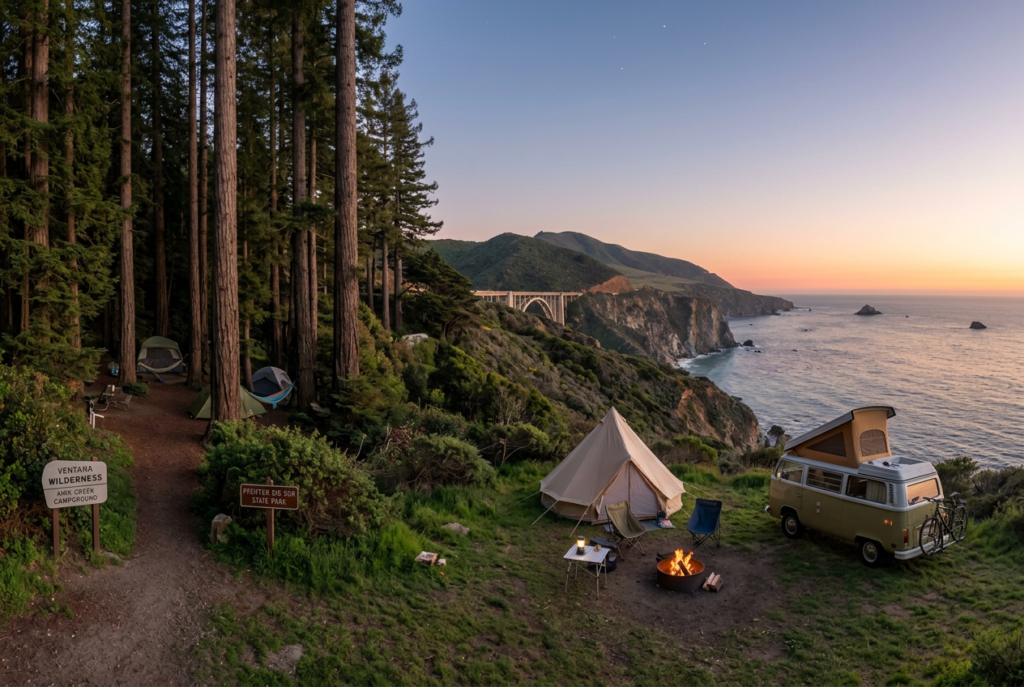
Big Sur camping areas have a reputation for a reason. You can sleep under redwoods beside a cold river, camp on a coastal bluff with nonstop ocean views, or book a hike-in site near some of California’s most photographed coastline.
The hard part is not finding a beautiful place. It’s choosing the right style of campground for your trip, then booking early enough to get it.
This guide breaks down the main Big Sur campgrounds and camping zones, what each one is best for, how reservations typically work, and practical tips that make a Big Sur camping trip smoother.
Big Sur camping areas at a glance
Big Sur camping is easiest to plan when you pick your “home base” style first.
Redwoods + river vibe
These spots feel shaded, cooler, and classic. Great for families and first-time Big Sur campers.
Ocean-view bluff camping
More wind and sun, fewer trees, bigger skies. Great for sunsets and dramatic scenery.
Hike-in or walk-in camping
Less car noise. More quiet. Usually more rules and more planning.
Forest campgrounds slightly inland
A good backup when coastal sites are full. Often warmer in the day and cooler at night.
Private campgrounds and cabin-style camping
Best if you want hot showers, a store, laundry, and an easier setup.
Before you pick a campground: what “Big Sur” really means
Big Sur isn’t a single town with one campground. It’s a long coastal region along Highway 1 with pockets of services and long stretches of rugged coastline in between.
That matters because:
You may not have cell signal where you camp.
Driving at night can be slow and very dark.
Food and fuel options are limited compared to most destinations.
Road conditions can change seasonally from storms and slides.
Build your plan around your campground location first, then add hikes and stops around it.
For current Highway 1 travel impacts, check Caltrans before you leave and again the morning you drive in.
Best Big Sur state park camping areas
California State Parks cover many of the most popular “classic Big Sur” camping areas. In general, these campgrounds are well-run, scenic, and in high demand.
Pfeiffer Big Sur State Park (redwoods + river base camp)
If you want the iconic Big Sur camping experience, Pfeiffer Big Sur is often the first place people look. It’s close to many Big Sur highlights and has that redwood-and-river feel that stays comfortable even in warmer months.
Why people love it
Shaded redwoods and river atmosphere
Good “central” location for exploring
A true campground feel, not a resort
Planning note
This campground is extremely popular, and the park notes that reservations can fill far in advance. Booking is typically handled through ReserveCalifornia.
Best for
First-time Big Sur campers
Families who want a reliable base camp
Trips focused on hikes, river time, and redwood scenery
Andrew Molera State Park (hike-in trail camp when in season)
Andrew Molera is known for trails, open meadows, and a more “wild” feel. The trail camp is hike-in, which filters out a lot of noise and traffic.
Important seasonal note
The park’s camping page includes seasonal closure details and a scheduled reopening date for the trail camp. Always confirm the current status before planning around it.
Best for
People who want a quieter night than roadside campgrounds
Light-pack tent campers
Trips focused on hiking and nature rather than campground amenities
Julia Pfeiffer Burns State Park (limited hike-in environmental sites)
Julia Pfeiffer Burns is famous for dramatic coastal views and McWay Falls. Camping here is not “drive-up campground camping.” The park offers a very limited number of hike-in environmental campsites, and they tend to book out.
Best for
Experienced campers who are comfortable carrying gear
People who want a unique Big Sur overnight experience
Trips where the campsite is part of the goal
Limekiln State Park (check status before you plan)
Limekiln is one of the most loved Big Sur camping names because it combines coastal scenery with redwoods and a waterfall trail.
But campground availability can change over time. For example, the Limekiln State Park page currently indicates day-use only with the campground closed. Always verify the current status before building your trip around it.
Best for
Day-use hikes and sightseeing when camping is unavailable
Future camping plans once the campground is open again
Los Padres National Forest campgrounds near Big Sur
If you want ocean-view camping and you’re okay with fewer amenities, Los Padres National Forest campgrounds can be the sweet spot. Many bookings run through Recreation.gov.
Kirk Creek Campground (ocean views from the bluff)
Kirk Creek is one of the most iconic ocean-view campgrounds on the Big Sur coast. It sits on a bluff overlooking the Pacific, with big sunset energy and a more open, coastal feel.
What it’s like
Open sites and coastal wind
Ocean views are a major feature
Less shade than redwood campgrounds
Good to know
Check water availability details and campground rules before you arrive. Some coastal campgrounds have limited services compared to state parks.
Best for
Couples and friends who want sunsets at camp
Photographers and early risers
People who don’t mind wind and cooler nights
Plaskett Creek Campground (near the beach, forest feel)
Plaskett Creek is a popular choice for campers who want a coastal location but prefer more trees and a slightly more sheltered feel than a pure bluff campground.
One of the big draws is proximity to Sand Dollar Beach, which Recreation.gov describes as the largest sandy beach in the Big Sur area.
Reservations and site mix
The Forest Service notes that many sites are reservable through Recreation.gov, with a small number sometimes managed differently. Always confirm the latest details before arrival.
Best for
Beach-focused camping days
Families who want coastal access without the full “bluff wind” experience
Campers who want a balanced coastal/forest atmosphere
Escondido Campground (inland forest backup option)
If the main coastal campgrounds are booked, Escondido can be a strong Plan B. It’s inland in the Santa Lucia Mountains and is often described as a quieter, more “tucked away” campground experience.
Best for
A calmer, less crowded campground vibe
Campers who don’t need to be right on the ocean
Trips that include scenic drives and hiking days
Private Big Sur camping areas and “camping with amenities”
Big Sur also has private campgrounds that combine classic camping with a more comfortable setup. These can be great when you want showers, laundry, a camp store, and fewer logistics.
Big Sur Campground & Cabins (river + convenience)
This is one of the best-known private options in the region, offering campsites and cabin stays with on-site conveniences like a store and other amenities.
Best for
Families who want a smoother trip
Groups mixing tent camping and cabins
Campers who like having supplies and services nearby
Riverside Campground & Cabins (redwoods, river, mixed lodging)
Riverside offers tent and RV campsites plus cabins, set along the Big Sur River under redwoods.
Best for
Small groups who want options (tent, RV, cabin)
Long weekends where showers and laundry help
People who want a “comfortable camping” base
Fernwood Resort & Campground (historic Big Sur stop with camping)
Fernwood is another long-running Big Sur name, offering a mix of camping and lodging and a more “destination campground” feel.
Best for
Campers who want dining or services on-site
Trips where you want a lively, social campground atmosphere
People who prefer having more structure and support
Ventana Campground (tent-only and glamping-style options)
Ventana is known for a curated camping experience. It’s also the kind of place where rules can be more specific than a typical campground, including limitations on what vehicles are allowed for camping.
Best for
People who want a polished camping experience
Campers who don’t want RV traffic
Special-occasion trips where comfort matters
How to choose the best Big Sur camping area for your trip
If you’re stuck deciding, use these questions.
Do you want redwoods or ocean views?
Redwoods + river camping feels sheltered and quieter.
Ocean-view camping feels dramatic and open.
If you’ve never camped in Big Sur, redwoods are often the easier first trip. It’s usually less windy, and sleep can be more comfortable.
How much comfort do you want at night?
If you want easy sleep, quick showers, and less packing, private campgrounds or cabins are often the best choice.
If you want the “Big Sur classic” and you’re okay with campground basics, state park campgrounds are a great fit.
If you want quiet and don’t mind carrying gear, hike-in sites can be unforgettable.
How important is location?
Big Sur drives look short on a map and feel longer in real life.
If your “must-do” spots are in the north (closer to Carmel), pick a northern base.
If you plan to explore the south (around Sand Dollar Beach and the southern viewpoints), you may be happier camping farther south instead of driving long stretches each day.
Are you booking last-minute?
If you’re booking close to your travel dates, focus on:
Weekday stays
Inland forest campgrounds
Private campgrounds with cancellations
Shorter trips (one night) to fit availability gaps
Reservations: what to know before you try to book
Big Sur campgrounds often fill fast, especially for weekends.
California State Parks typically use ReserveCalifornia, and the reservation system commonly opens dates about six months in advance.
Many Los Padres National Forest campgrounds use Recreation.gov for reservations, including well-known coastal options like Kirk Creek and Plaskett Creek.
Two tips that help a lot:
Book first, then request time off.
If you’re flexible, search for single-night gaps and build a short trip around them.
When to go camping in Big Sur
Big Sur can be a year-round destination, but conditions change by season.
Spring
Great for green hills and flowing creeks. Also a time when storms can still impact road travel.
Summer
Most popular. More sun. More crowds. Higher demand for reservations.
Fall
Often the best balance. Fewer crowds than summer, with stable weather.
Winter
Quieter and sometimes easier to book, but weather can be unpredictable. Road conditions matter more.
No matter the season, always confirm Highway 1 conditions before you leave.
What to pack for Big Sur camping areas
Big Sur camping is easier when you pack for changing conditions.
Clothing basics
A warm layer, even in summer
A wind layer for ocean-view campgrounds
Rain protection in the wetter months
Extra socks and a dry set of clothes
Sleep basics
A warmer sleeping bag than you think you need
A real sleeping pad (comfort matters on longer trips)
A beanie for cold nights, especially near the coast
Camp comfort upgrades worth bringing
A headlamp per person
A small table or organizer bin for food and cooking gear
A thermos for coffee or hot drinks on chilly mornings
Campfires, food storage, and “rules that change”
Big Sur camping areas can have fire restrictions, and they can change with conditions. The same goes for food storage guidance.
Instead of relying on a generic rule, check your campground’s current posted rules when you arrive and follow ranger or host guidance.
If you want the least stress:
Plan meals that don’t require a long fire.
Bring a simple stove for cooking.
Keep food secured and your campsite tidy.
Road conditions and driving tips that matter in Big Sur
Big Sur is famous for its coastline and also for how often road conditions can affect travel.
Use these habits:
Check conditions the night before and the morning you leave.
Download maps offline (cell service can be inconsistent).
Avoid arriving after dark if you can.
Keep extra water and snacks in the car.
If Highway 1 impacts are in the news, go straight to Caltrans rather than relying on social posts.
Sample 3-day itineraries based on your camping area
These are simple templates you can adjust.
Itinerary A: Redwood river base camp
Day 1
Arrive, set up, short riverside walk
Easy dinner and early night
Day 2
Morning hike
Midday rest at camp
Afternoon scenic drive and viewpoints
Campfire dinner
Day 3
Quick breakfast
One short trail or beach stop
Drive out before midday traffic
Itinerary B: Ocean-view bluff camping
Day 1
Arrive before sunset
Set up and do “golden hour” photos
Wind-down dinner (keep it simple)
Day 2
Morning coffee with ocean views
Beach time or a longer hike
Back to camp for sunset and stargazing
Day 3
Early pack-up
One final viewpoint stop
Head out before the road gets busy
Itinerary C: Private campground with amenities
Day 1
Arrive, set up, store run if needed
Short walk and relaxed dinner
Day 2
Big hike or “explore day”
Return for showers, laundry, and a calm evening
Optional nearby food stop if you want a break from cooking
Day 3
Pack up slowly
One short activity
Easy drive home
FAQs about Big Sur camping areas
What’s the best Big Sur campground for first-timers?
A redwoods-and-river campground is often the easiest first trip because it’s more sheltered from wind and can be more comfortable for sleep. Pfeiffer Big Sur is a common starting point, but availability is competitive.
Can you camp near McWay Falls?
Julia Pfeiffer Burns State Park has very limited hike-in environmental campsites, and reservations are required.
Where do you get the best ocean views from your campsite?
Kirk Creek is widely known for ocean views from the bluff-top campground setting.
What’s the best option if everything is booked?
Look at inland campgrounds like Escondido, consider weekday dates, or switch to a private campground with cabins or mixed lodging.
Do you need to worry about Highway 1 closures?
It’s smart to check before every trip. Conditions and travel impacts can change, especially after storms. Caltrans is the best place to confirm what’s open.
Final thoughts
The best Big Sur camping area is the one that matches how you actually want to spend your days.
If you want classic Big Sur comfort and an easy base, aim for redwoods and river camping.
If you want maximum scenery at camp, book an ocean-view bluff campground and pack for wind.
If you want fewer logistics, pick a private campground or cabin setup so you can focus on hikes, beaches, and sunset stops instead of camp chores.
If you tell me your travel month, group size, and whether you prefer redwoods or ocean views, I’ll recommend the top 3 camping areas for your exact trip style.