
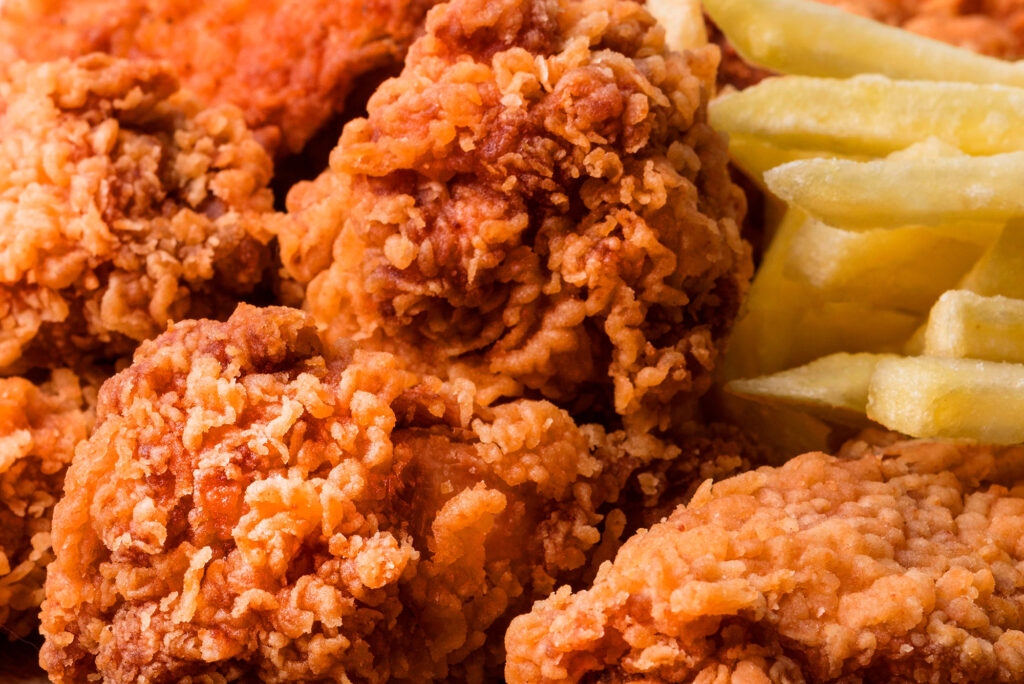
If you’ve heard people talk about Nashville hot chicken like it’s a personality trait, this is why.
Hot chicken isn’t just “fried chicken but spicy.” It’s a specific technique: crispy fried chicken finished with a chile-infused oil/paste that stains your fingers orange-red and builds heat in layers—first on the lips, then the tongue, then the “why did I do this” back-of-throat moment.
And in Nashville, heat comes with culture, history, and some very strong opinions about which shop does it “right.”
This guide gives you two things you actually need:
- where to go (the best hot chicken spots), and
- how to order (spice levels, what they mean, and how not to accidentally ruin your day).
Quick “where should I go?” cheat sheet
If you only have time for one stop:
- For the original + classic vibe: Prince’s Hot Chicken
- For “this is not a joke” heat: Bolton’s Famous Hot Chicken & Fish
- For the easiest first-timer ordering system: Hattie B’s Hot Chicken
- For fun formats (tacos/quesadillas/etc.): Party Fowl
Want a mini crawl (2–3 stops)? Do one “legend,” one “heat monster,” and one “creative remix.”
What makes Nashville hot chicken different (and why it hits so hard)
A lot of spicy chicken gets its heat from a marinade, a spicy batter, or a sauce you can wipe off.
Nashville hot chicken’s signature punch comes from after frying: a chile-infused oil/paste is brushed or spooned onto the finished chicken, so the spice sits right on the crisp crust and gets warm as you eat.
That’s why it can feel:
- immediate (lip burn),
- then deeper (tongue/roof-of-mouth),
- then lingering (throat heat + slow sweat).
And yes—serving it on white bread with pickles isn’t just tradition. The bread soaks up spicy oil, and pickles cut through richness and heat.
A short origin story (because the backstory matters here)
The hot chicken origin story most people hear starts with Thornton Prince and an attempt at “revenge” that turned into a beloved local style. You’ll see versions of it told by Prince’s and by major food writers.
The big takeaway isn’t the gossip detail—it’s that hot chicken grew in Black Nashville and became a defining regional dish long before it went nationwide.
So when locals say “respect the classics,” they’re not being dramatic. They’re protecting a real culinary lineage.
Understanding spice levels (so “medium” doesn’t betray you)
Here’s the tricky part: spice levels are not standardized across restaurants.
One shop’s “medium” can be another shop’s “hot.” And even at the same place, batches can vary because the heat depends on how much chile oil/paste gets applied.
A practical heat guide that works almost everywhere
Use this as your mental model:
- No heat / Southern / Non-spicy: crispy fried chicken flavor, minimal burn.
- Mild / Lite mild: gentle warmth, still very edible for most people.
- Medium: where Nashville starts to feel like Nashville.
- Hot: sweat level, slow burn that lingers.
- Extra hot / “signature extreme name”: for heat-chasers only.
How to choose your level honestly
Ask yourself one question:
Do you want “spicy and fun,” or do you want “I survived”?
If you want fun: start one step lower than your ego suggests, then go up next time.
The best Nashville hot chicken spots, with spice levels that make sense
Below are standout places where the chicken is worth the hype—and where the heat scale is clear enough to order with confidence.
1) Prince’s Hot Chicken
Prince’s is widely recognized as the original institution, and it still sets the yardstick for what “hot chicken” is supposed to taste like.
The flavor profile leans classic: peppery heat, fried-chicken richness, and a direct line to the dish’s history.
Heat levels you’ll see: Mild, Medium, Hot, Extra Hot.
How to order without regret
- If you’re new: Mild
- If you love spicy food: Medium
- If you want a “story”: Hot
- If you want pain: Extra Hot (seriously)
What to get
- Bone-in pieces if you want the most traditional experience
- Tenders if you want easier eating with the same heat payoff
2) Bolton’s Famous Hot Chicken & Fish
Bolton’s has a reputation for serious heat, but what’s great is that they actually explain their spectrum.
They offer a clear scale that includes both “no heat” and “might contain the devil.” (Their words are… vivid.)
Bolton’s Spectrum of Spice (as listed)
- Non-Spicy
- Lite Mild
- Mild
- Medium
- Hot
- Extra Hot
Ordering tip
If you’re used to generic “medium spicy,” try Lite Mild or Mild first here, then level up.
What to get
- Hot chicken for the classic
- Hot fish if you want a Nashville twist with the same spice philosophy
3) Hattie B’s Hot Chicken
Hattie B’s is the most beginner-friendly hot chicken experience: fast ordering, consistent menu structure, and a heat scale that’s easy to understand.
And yes—locals debate it. But it’s popular for a reason: it’s approachable, and the sides are part of the draw.
Hattie B’s heat levels (official)
- Southern (no heat)
- Mild
- Medium
- Hot
- Damn Hot
- Shut the Cluck Up!!!
Their FAQ also warns that the biggest jump is from Hot → Damn Hot, describing it as a more intense, habanero-forward leap.
What to get
- Sandwich if you want maximum crunch-to-bite ratio
- Tenders if you want easy sharing / easy heat comparison between friends
Good first order
- Medium if you like spicy food
- Hot if you’re chasing the classic “Nashville Hot” vibe
4) Slow Burn Hot Chicken
Slow Burn is beloved because it gives you a graduated path into heat—more nuance than “mild/medium/hot.”
You’ll see it recommended for having multiple heat levels with names that signal exactly what you’re getting into.
What sources say about the heat scale
- Nashville Scene described “more than 10 spice levels,” from a gentle option up to a top-end level called “The End.”
- Eater Nashville notes a range that includes lighter levels like “sprinkle” up through “inferno.”
How to order
- Choose a lower named level than you think you need (because the whole point here is that the steps are tighter).
What to get
- A classic plate first
- Then come back for a remix (they’re known for expanding beyond the strict old-school template).
5) Party Fowl
Party Fowl is hot chicken for people who want variety: tacos, sandwiches, and mashups that still respect the core idea of hot chicken.
Their own description frames the heat scale from a mild end up to their extreme level called “Poultrygeist.”
Heat range (as they describe it)
- “Southern Fried” → “Poultrygeist”
Why go
- You want hot chicken in forms other than “piece of chicken on bread”
- You’re with a group that has mixed spice tolerance (easier to mix-and-match menu styles)
6) Pepperfire Hot Chicken
Pepperfire gets recommended a lot by people who want heat and crunch.
They offer multiple “degrees of heat,” and sources commonly describe their range running from mild up to a top-end “XX Hot.”
Heat range (as described)
- Mild → XX Hot
What to know
- If you’re in a rush, tenders can be faster than bone-in pieces (practical but real).
7) 400 Degrees Hot Chicken
400 Degrees has a cult following, and it’s often mentioned alongside the “serious heat” places.
One popular guide highlights that “400 degrees” is used as a top-end spice level name, and it’s repeatedly framed as intense.
You may also see a numerical heat naming scheme (like “100° / 200° / 400° / 800°”) in delivery menus and write-ups—useful as a clue, but always confirm on the current menu when you’re ordering.
How to order
- If you’re not a heat hobbyist, don’t start anywhere near the top number.
Why go
- You want crisp, deeply seasoned chicken with an “I came here on purpose” vibe.
8) Red’s Hot Chicken
Red’s makes ordering super simple, and their heat levels are clearly spelled out.
Heat levels (official)
- Southern
- Mild
- Medium
- Hot
- Nashville Fire
Why it’s a great stop
- You want a clean, readable scale with a clearly labeled “extreme” option.
9) Bishop’s Meat & Three (hot chicken + classic comfort plates)
If you want a broader Tennessee comfort-food plate that still scratches the hot chicken itch, Bishop’s is frequently mentioned as connected to the family behind Hattie B’s.
This is a smart pick if part of your group wants hot chicken and part of your group wants the “meat-and-three” comfort route.
How to order like a local (even if you’re visiting)
Locals don’t treat hot chicken like a one-time stunt. They treat it like a repeatable craving.
So order in a way that lets you enjoy it.
The “smart first-timer” order
- Pick a medium-ish level at a place with a clear scale (Hattie B’s, Red’s, Bolton’s)
- Get a side that cools (slaw, mac, potato salad)
- Eat half, pause, then decide if you want more heat next time
The “I love spicy food” order
- Start one notch below the top
- If you’re still smiling after the first piece, you can level up on your next visit
The “I want the story” order
- Choose a classic shop (Prince’s or Bolton’s)
- Order a traditional plate
- Don’t rush it—hot chicken punishes speed-eating
Spice level translation (approximate, not scientific)
Because everyone asks: “If I like X at one place, what should I get somewhere else?”
Here’s a rough way to think about it:
- If you like Southern / no heat at one place, you probably want Southern / Non-Spicy anywhere.
- If you like Mild at one place, you might order Lite Mild at a spicier shop.
- If you like Medium, you can usually handle “classic Nashville hot” territory.
- If you order the top level anywhere, you are no longer tasting “chicken” as the main idea.
Also: day-to-day variance is real. Heat depends on application and batch.
How to survive the heat (and still enjoy the meal)
A quick note that actually helps:
What works for cooling
- Dairy (milk, shakes, creamy slaw)
- Bread (it absorbs the spicy oil)
- Time (the burn usually peaks, then fades)
What people think works but doesn’t
- Chugging water (it spreads the burn around)
And if you’re sharing with friends, order two levels side-by-side. It makes the whole meal more fun, and you learn your tolerance fast.
A simple 1-day hot chicken crawl plan
If you want to taste the range without tapping out:
- Start with a classic: Prince’s (Mild/Medium).
- Go one step hotter at a place with a detailed scale: Bolton’s (Lite Mild/Mild/Medium).
- Finish with variety: Party Fowl in a taco/sandwich format (mid-level heat).
Keep portions smaller than your pride wants. You’re sampling, not proving a point.
FAQs people Google right before they order
Is Nashville hot chicken always insanely spicy?
No. Most places offer no-heat or mild options, and some (like Bolton’s) explicitly include non-spicy on the scale.
What’s the “real” Nashville hot level?
Many menus frame Hot (not “extra hot”) as the classic Nashville-hot experience. Hattie B’s even calls Hot their “true-blue Nashville Hot” level.
Why is it served on white bread?
Because it’s practical: it soaks up spicy oil and gives you a soft buffer under crunchy chicken.
Final ordering advice (the one you’ll thank yourself for)
If you want the best experience, don’t treat spice level like a personality test.
Treat it like seasoning: you want enough heat to make the chicken sing, not enough heat to make you stop tasting it.