

Red snapper is one of those fish that feels “restaurant-level,” but it’s actually simple to cook at home once you know a few basics.
It has a mild, slightly sweet flavor and a firm-but-flaky texture. That makes it versatile. You can bake it on a weeknight, pan-sear it for crispy skin, or grill a whole snapper for a crowd.
This guide walks you through how to cook red snapper step by step, with multiple methods, seasoning ideas, and practical tips to keep it juicy and flavorful.
Why red snapper is such a great fish to cook
Red snapper works in a lot of cooking styles because it’s not overly oily and it holds together well.
It’s a strong choice if you want:
- A mild fish that isn’t “fishy”
- Fillets that don’t fall apart easily
- A whole fish that grills or roasts beautifully
- A protein that pairs with bright, fresh flavors (lemon, herbs, salsa, citrus)
It also cooks quickly, which is perfect when you want something impressive without a long prep.
Buying red snapper: fresh vs frozen
You can cook red snapper successfully whether it’s fresh or frozen. What matters most is quality.
How to spot good fresh red snapper
Look for:
- A clean, ocean-fresh smell (not sour or ammonia-like)
- Flesh that looks moist and firm, not dry or mushy
- Fillets that are translucent and pinkish-white, not dull gray
- If buying whole: clear eyes and red, moist gills
Frozen red snapper can be excellent
Frozen fish is often frozen soon after being caught, which can protect freshness.
Choose:
- Vacuum-sealed fillets with little to no ice crystals
- Packages without tears or heavy frost (signs of freezer burn)
Thaw it safely overnight in the fridge, or use a cold-water thaw (sealed bag, changed water every 30 minutes).
Red snapper cuts: fillets, skin-on, or whole fish
Red snapper is sold in a few common forms. Each cooks a little differently.
Fillets (skin-on or skinless)
- Skin-on is best for pan-searing and crispiness.
- Skinless is easiest for baking, steaming, or tacos.
Whole red snapper
Whole fish is a classic for roasting and grilling.
It stays juicy because the bones help protect the flesh, and it’s easy to flavor by stuffing the cavity with herbs, lemon, and aromatics.
If you buy whole fish, ask the fish counter to scale and clean it. That saves time and mess.
Prep tips that make red snapper taste better
These small steps matter more than fancy ingredients.
Pat it dry
Moisture blocks browning and crispiness.
Use paper towel and press gently on both sides. This is especially important for pan-searing.
Salt at the right time
- For quick cooking, salt 10 to 20 minutes before cooking.
- If you salt much earlier, keep it covered in the fridge so the surface stays clean and fresh.
Don’t over-marinate
Red snapper is delicate. Acidic marinades (lime, lemon, vinegar) can “cook” the surface and make it soft.
If your marinade is acidic, keep it short: 15 to 30 minutes is usually enough.
Keep portions even
Try to choose fillets of similar thickness so they finish at the same time.
How to know when red snapper is done
Overcooking is the main reason fish turns dry.
You’re looking for flesh that turns opaque and flakes easily, while still looking juicy in the center.
A thermometer is the most reliable guide. USDA food safety guidance lists fish as done at 145°F / 62.8°C in the thickest part.
If you don’t have a thermometer, use these cues:
- The flesh turns from translucent to opaque
- It flakes with gentle pressure from a fork
- The thickest part separates into clean layers
Best seasonings for red snapper
Red snapper’s mild taste plays well with many flavor profiles. Here are dependable combos.
Classic lemon-herb (bright and simple)
- Olive oil or melted butter
- Lemon zest + lemon juice
- Garlic
- Parsley, dill, or thyme
- Salt and black pepper
Cajun or blackened style (bold and smoky)
- Paprika
- Garlic powder and onion powder
- Cayenne (optional)
- Dried oregano and thyme
- Salt and pepper
Mediterranean style (savory and fresh)
- Olive oil
- Lemon
- Oregano
- Tomatoes, olives, capers (optional)
Asian-inspired (sweet-salty)
- Soy sauce (or tamari)
- Ginger
- Garlic
- Sesame oil (a little goes far)
- Scallions
Method 1: Bake red snapper fillets (easy and reliable)
Baked red snapper is the easiest method to nail, especially for beginners.
It’s low-mess, hands-off, and hard to ruin if you watch the time.
Simple baked red snapper (lemon garlic)
Serves: 2 to 4
Time: about 15 to 20 minutes
Ingredients:
- 2 to 4 red snapper fillets
- 1 to 2 tbsp olive oil or melted butter
- 2 cloves garlic, minced
- 1 lemon (zest + slices)
- Salt and pepper
- Chopped parsley (optional)
Steps:
- Heat your oven to 400°F (205°C).
- Pat the fillets dry and season both sides with salt and pepper.
- Place fillets on a lined baking sheet (or lightly oiled baking dish).
- Drizzle with oil or butter. Add garlic, lemon zest, and lemon slices on top.
- Bake until the thickest part is opaque and flakes easily.
Timing tip:
- Thin fillets often take 8 to 12 minutes
- Thicker fillets often take 12 to 16 minutes
Use doneness cues, not just the clock.
Baked snapper variations (same method, different flavor)
Sheet-pan snapper with veggies
Add sliced zucchini, cherry tomatoes, onion, and a drizzle of olive oil. Roast everything together.
Spicy citrus snapper
Use lime zest, chili flakes, cumin, and a touch of honey.
Herb-crusted snapper
Top with a mix of breadcrumbs, parsley, lemon zest, and olive oil for a lightly crunchy finish.
Method 2: Pan-seared red snapper (crispy skin)
If you love crispy skin, pan-searing is the move.
This method is fast and gives you that golden, crackly finish that feels like a bistro plate.
Pan-seared snapper with crispy skin
Time: about 10 minutes
What you need:
- Skin-on red snapper fillets
- Neutral oil (avocado, canola, or grapeseed)
- Salt and pepper
- Optional: butter, garlic, lemon, fresh herbs
Steps:
- Pat the skin very dry. Season with salt and pepper.
- Heat a skillet over medium-high heat. Add a thin layer of oil.
- Place the fish skin-side down and press gently for 10 to 15 seconds so it doesn’t curl.
- Cook mostly on the skin side until it’s crisp and the flesh is mostly opaque.
- Flip briefly to finish the top side.
Quick rule that helps:
- Cook about 80% of the time skin-side down
- Flip only at the end
Optional finish: butter baste
Lower heat, add a small knob of butter with smashed garlic and herbs, and spoon it over the fish for 30 to 60 seconds.
Method 3: Grill red snapper (fillets or whole fish)
Grilling adds smoky flavor, but fish can stick. The key is preparation and heat control.
Grilled snapper fillets (easy way)
Best approach: foil or a grill basket.
Steps:
- Preheat grill to medium-high and clean the grates well.
- Oil the grates (use tongs with an oiled paper towel).
- Brush fillets with oil and season.
- Grill skin-side down first if skin-on, and avoid moving it too soon.
- Flip only when it releases easily.
If you want the safest, least-stress method, grill it in foil packets with lemon, herbs, and a little butter.
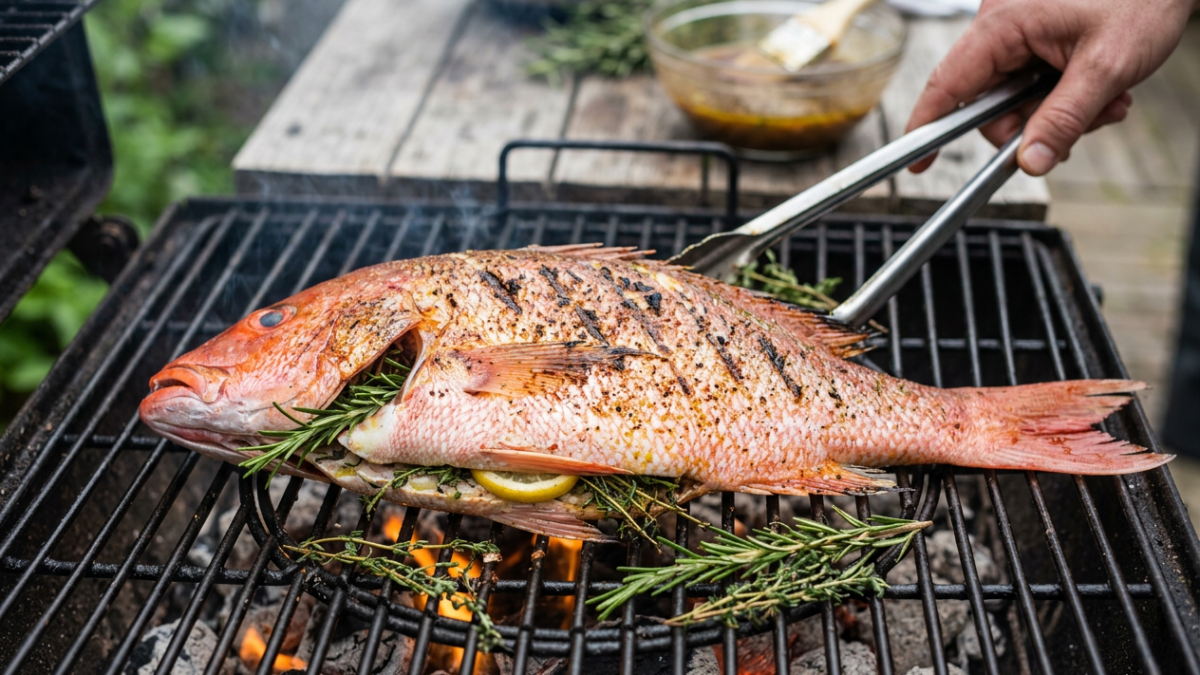
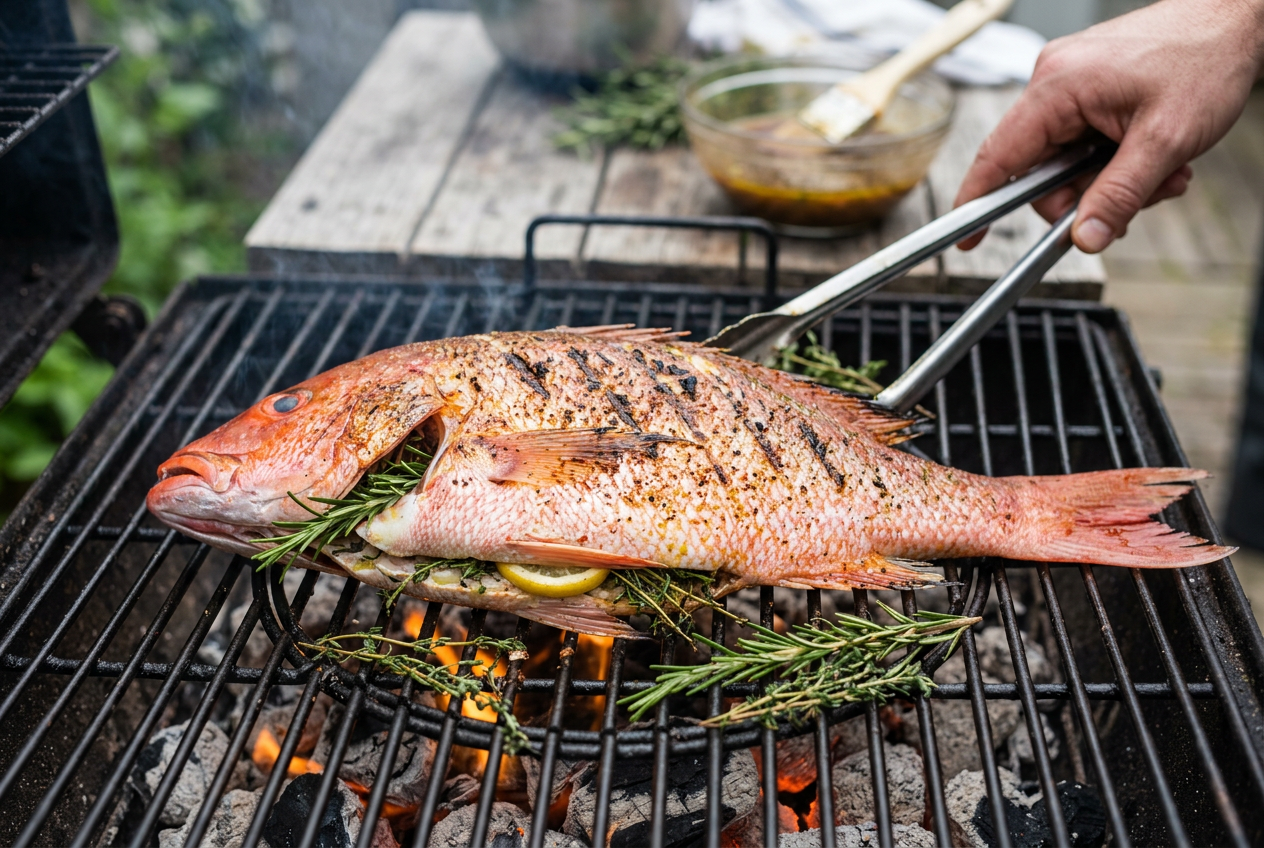
Grilled whole red snapper (show-stopper)
Whole fish stays juicy and is perfect for citrus, herbs, and aromatics.
Steps:
- Ask for the fish to be cleaned and scaled.
- Pat dry, score the skin 2 to 3 times on each side.
- Season inside and out with salt, pepper, and oil.
- Stuff the cavity with lemon slices, garlic, and herbs.
- Grill over medium heat, flipping carefully (a fish basket helps a lot).
It’s done when the thickest part flakes easily and the flesh near the backbone is opaque.
Method 4: Air fryer red snapper (fast and crisp)
Air fryers are great for quick cooking with a lightly crisp outside.
Basic approach:
- Preheat air fryer to 375°F to 390°F (190°C to 200°C).
- Lightly oil the basket or use parchment made for air fryers.
- Season fillets and place in a single layer.
- Cook until opaque and flaky.
Typical timing:
- Many fillets finish in 8 to 12 minutes, depending on thickness.
Don’t overcrowd. Fish steams when packed tightly.
Method 5: Poach or steam red snapper (very tender)
This is the gentlest method and great for delicate sauces.
Simple poached snapper
Poaching liquid ideas:
- Water + salt + lemon slices
- Broth with ginger and scallions
- Coconut milk + aromatics for a tropical vibe
Steps:
- Bring the liquid to a gentle simmer (not a rolling boil).
- Slide in the fish and keep the heat low.
- Cook until opaque and flaky.
This method is forgiving and keeps the fish moist.
Method 6: Fry red snapper (crispy and classic)
Fried snapper is popular in many coastal cuisines.
Two approachable options:
Shallow fry (easier at home)
Dredge in seasoned flour or cornmeal, then fry in a thin layer of oil until golden.
Pan-fry with a light batter
Keep it thin so the fish stays the star.
The most important tip is oil temperature control. Too cool gets greasy. Too hot burns the coating before the center cooks.
Method 7: Use cooked snapper in easy meals
If you’re cooking red snapper for meal prep or leftovers, it’s perfect in quick dishes.
Red snapper tacos
Flake cooked snapper and add:
- Cabbage slaw
- Lime crema (or yogurt-lime sauce)
- Pico de gallo or mango salsa
Snapper rice bowls
Pair with:
- Rice or quinoa
- Cucumbers, avocado, edamame
- Soy-ginger drizzle
Snapper curry or stew
Gently simmer pieces in sauce at the end so they don’t overcook.
Common red snapper mistakes (and how to fix them)
“My snapper turned out dry”
Most likely cause: overcooking.
Fix next time:
- Use a thermometer or pull it slightly earlier and let it carry over
- Choose gentler heat (bake at 375°F to 400°F, not hotter)
- Add a sauce (chimichurri, salsa verde, lemon butter)
“It stuck to the pan”
Usually it wasn’t dry enough, or the pan wasn’t hot enough.
Fix:
- Pat dry aggressively
- Preheat the pan
- Don’t move the fish too soon
“It tastes too fishy”
That’s often a freshness issue, not your recipe.
Fix:
- Buy from a reliable fish counter
- Cook the same day when possible
- Use bright flavors (lemon, herbs, ginger, tomato)
Storing red snapper and leftovers
Seafood is best when it’s fresh, but you can store it safely with good habits.
For raw seafood, FDA guidance says to keep it refrigerated at 40°F (4°C) or below, and use it within 2 days of purchase (otherwise freeze it).
For cooked snapper:
- Cool it quickly
- Store in an airtight container
- Use within 3 to 4 days for best quality
Reheating tip:
Reheat gently (low oven or covered skillet on low). High heat dries fish fast.
FAQ: Cooking red snapper
Should I cook snapper with the skin on?
If you’re pan-searing, yes. The skin helps protect the flesh and gets deliciously crisp.
If you’re baking or making tacos, skinless is often simpler.
Can I cook red snapper from frozen?
It’s possible, especially for baking. Expect longer cook time and slightly more moisture.
If you want the best texture, thaw overnight in the fridge.
What fish can I substitute for red snapper?
If you can’t find snapper, similar options include:
- Sea bream
- Grouper
- Tilapia (milder, softer)
- Cod (flakier, less firm)
Choose based on whether you want firm texture or delicate flakes.
Final tips for cooking red snapper perfectly
If you remember only a few things, remember these:
- Dry the fish well before cooking
- Season simply and let the flavor of the fish come through
- Use a thermometer or clear visual doneness cues
- Avoid overcooking, especially with thin fillets
- Match the method to your goal: bake for ease, sear for crispiness, grill for smoke
Once you cook red snapper a couple times, it becomes one of the easiest “special” meals you can make at home.
