
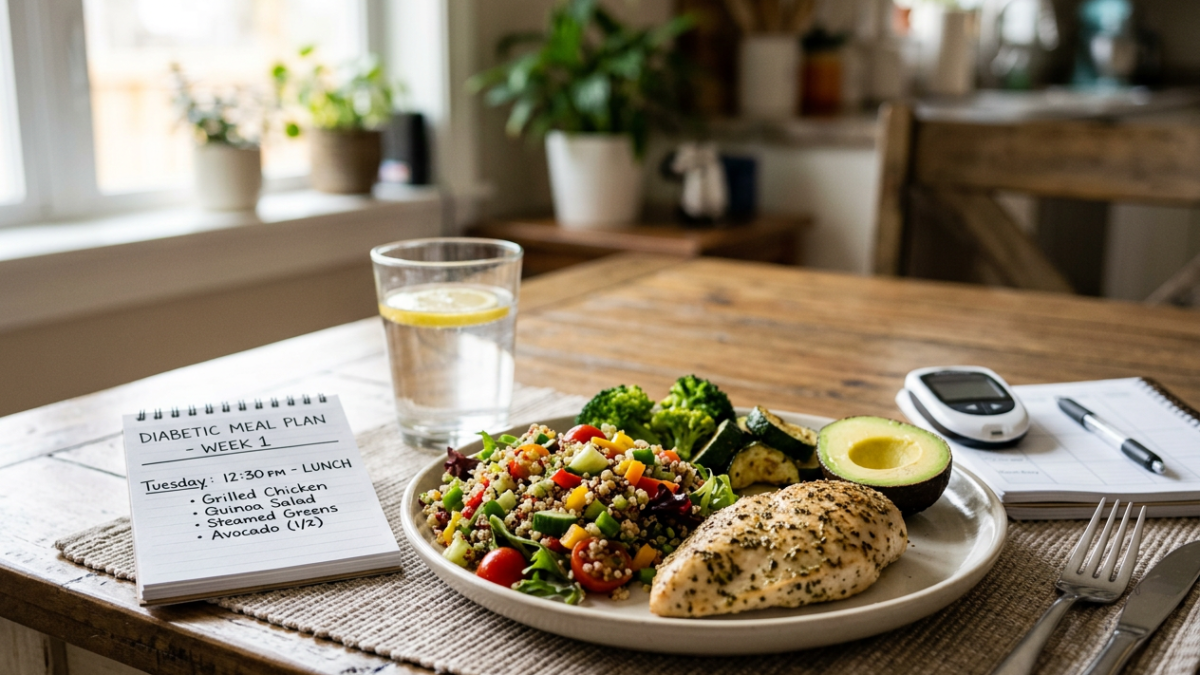

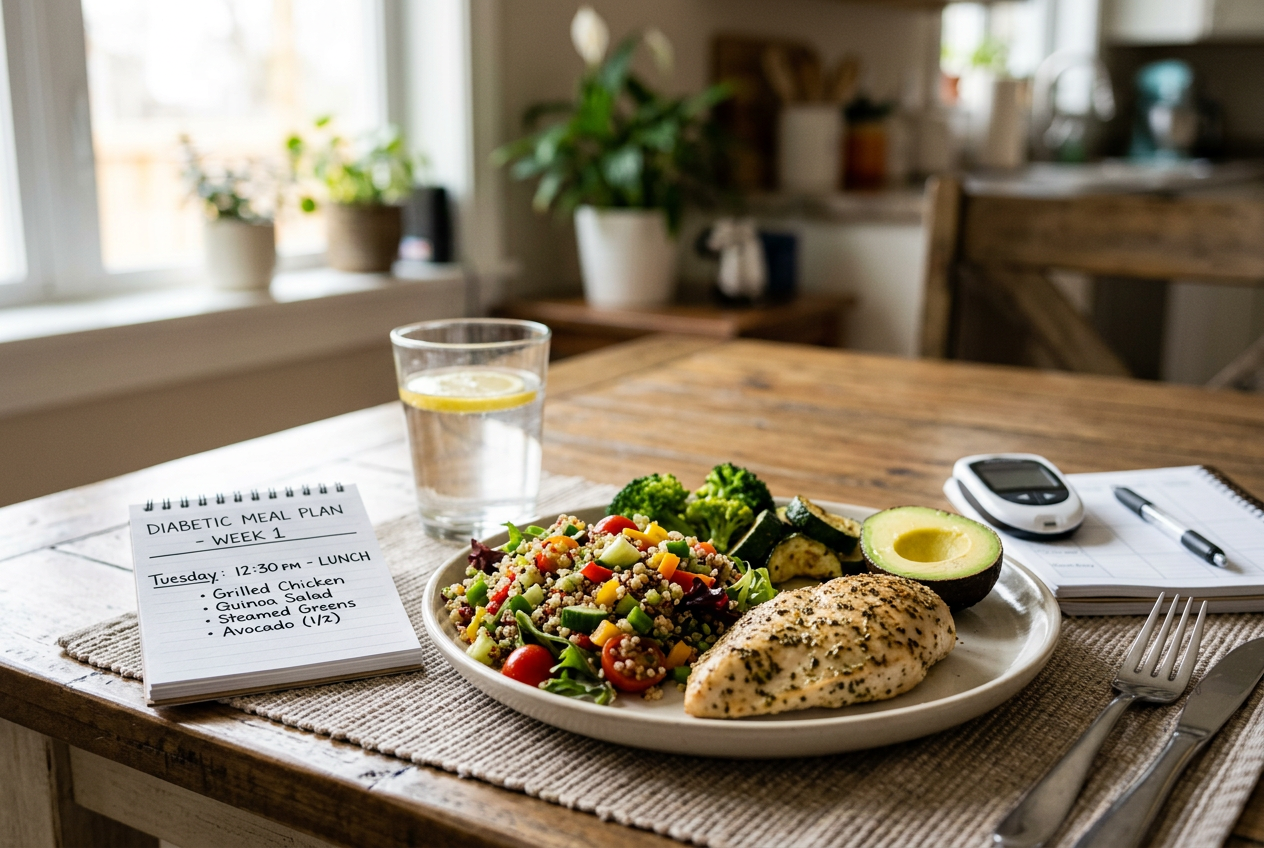
Living with diabetes (type 1, type 2, or gestational) can make food choices feel stressful. A good diabetic meal plan removes a lot of that stress.
It gives you structure without being rigid. It helps you keep blood sugar steadier, support heart health, and still enjoy meals you actually like.
This guide is general education, not medical advice. If you take insulin or meds that can cause low blood sugar, make meal changes with your diabetes care team.
This post pulls from widely used, evidence-based meal-planning tools like the plate method and carb counting described by major public health organizations.
What a diabetic meal plan is (and what it isn’t)
A diabetic meal plan is a repeatable way to choose:
- What to eat
- How much to eat
- When to eat
It’s meant to reduce big spikes and dips in blood sugar.
It is not a “perfect” diet. It is not about never eating carbs. It is not about tiny portions or skipping meals.
For many people, the best plan is the one you can follow most days.
The 3 goals behind diabetes-friendly meals
Most diabetes meal plans aim for three outcomes.
1) Steadier blood sugar
You’re trying to avoid large swings after meals and overnight.
2) Better heart health
Diabetes increases cardiovascular risk, so the plan should support healthy cholesterol, blood pressure, and weight.
3) Real-life sustainability
It has to work with school, work, budget, culture, travel, and cravings.
If your plan fails goal #3, it usually fails the other two.
The easiest framework: the plate method
If you want one tool that works fast, use the 9-inch plate method.
At most lunches and dinners:
- Half the plate: non-starchy vegetables
- One quarter: lean protein
- One quarter: quality carbohydrate foods
- Drink: water or a zero/low-calorie beverage
This method works because it naturally controls portions and balances carbs with fiber and protein, which tends to slow glucose spikes.
Non-starchy vegetables (half your plate)
These are lower in carbs and high in volume, vitamins, and fiber.
Examples:
- Leafy greens, salad mixes
- Broccoli, cauliflower, cabbage
- Zucchini, cucumbers, peppers
- Green beans, asparagus, mushrooms
- Tomatoes, eggplant
Tips that make this easier:
- Buy frozen veg and roast or microwave it
- Keep salad kits for low-effort meals
- Add veg into pasta, rice, wraps, and omelets
Lean protein (one quarter)
Protein supports fullness and helps blunt blood sugar rises when paired with carbs.
Examples:
- Chicken, turkey
- Fish and seafood
- Eggs
- Tofu, tempeh, edamame
- Beans and lentils (these also contain carbs)
- Greek yogurt, cottage cheese
Try to cook with methods that don’t add lots of saturated fat:
- Bake, grill, air-fry, roast, poach
- Use olive oil or avocado oil in small amounts
Quality carbs (one quarter)
Carbs aren’t “bad.” They’re a main energy source. The key is type, portion, and consistency.
Examples of “quality carbs” that often work well:
- Whole grains: oats, brown rice, quinoa, barley
- Starchy vegetables: sweet potato, squash, corn
- Beans and lentils
- Fruit
- Milk or plain yogurt
Carbs that can cause fast spikes for many people:
- Sugary drinks, juice
- Candy, desserts
- White bread, many bakery items
- Chips, crackers, ultra-processed snacks
You don’t have to “ban” these forever. You usually just plan them differently (smaller portion, paired with protein, not on an empty stomach).
Carb counting basics (without making life miserable)
Carb counting can be helpful if you:
- Use insulin (especially mealtime insulin)
- Notice big after-meal spikes
- Want more flexibility with food choices
A common teaching tool is: 1 carb serving = about 15 grams of carbohydrate.
Many people aim to keep carbs consistent meal to meal. Others match insulin to carbs. The “right” method depends on your type of diabetes, medications, and routines.
A practical starting point for many people
A widely used general starting range for many adults is:
- Meals: about 45–60 g carbs
- Snacks: about 15–30 g carbs
Some people need more, some need less. Teens, athletes, and very active people often need more total energy and carbs.
If you’re unsure, start with consistency first (similar carbs at similar meals), then adjust based on your readings and how you feel.
Carbs that tend to behave “better”
Not all carbs act the same. Two meals can both have 45 grams of carbs, yet affect you differently.
Carbs often cause a slower rise when they are:
- Higher in fiber (beans, oats, berries)
- Less processed (whole grains vs refined)
- Paired with protein and healthy fat
- Eaten with vegetables
Carbs often hit faster when they are:
- Liquid (soda, sweet coffee drinks, juice)
- Refined and low-fiber (white bread, many cereals)
- Eaten alone (like a big bowl of rice with little protein)
Step-by-step: build your personal diabetic meal plan
This is the system that works for most people.
Step 1: Pick your meal pattern
Choose a pattern you can repeat:
- 3 meals a day
- 3 meals + 1 snack
- 3 meals + 2 snacks (common for active people)
If you get low blood sugar, snack timing matters. If you don’t, you may not need snacks daily.
Step 2: Set a carb “shape” for your day
You don’t need perfect math. You need a consistent pattern.
Examples:
- Moderate-carb pattern: 45 g breakfast, 45–60 g lunch, 45–60 g dinner, 15–20 g snack
- Lower-carb pattern: 30–45 g breakfast, 30–45 g lunch, 30–45 g dinner, optional small snack
If you’re growing, very active, or training for sports, avoid overly restrictive plans. Energy matters.
Step 3: Create 5–10 “default meals”
Default meals are your secret weapon.
Build a short list you like, that you can make quickly.
Examples:
- Veggie omelet + whole grain toast
- Greek yogurt + berries + nuts
- Chicken salad wrap + side veggies
- Salmon + roasted vegetables + quinoa
- Stir-fry veggies + tofu + brown rice
When life gets busy, defaults prevent random choices that spike blood sugar.
Step 4: Use “pairing” to improve meals
If you eat carbs, pair them with:
- Protein
- Fiber (vegetables, beans, whole grains)
- Healthy fat (nuts, seeds, olive oil)
This usually improves fullness and slows the glucose rise.
Example:
- Instead of: bagel alone
- Try: half a bagel + eggs + tomato + avocado
Step 5: Plan for the foods you love
A plan that ignores your favorites won’t last.
Make a list of 5 foods you love (pizza, pasta, burgers, dessert, etc.). Then plan smarter versions:
- Pizza: thin crust + salad + protein topping
- Pasta: smaller portion + lots of vegetables + chicken/tofu
- Burger: whole grain bun or open-faced + side salad
- Dessert: smaller portion after a balanced meal, not alone
What to eat: a diabetes-friendly grocery list
Use this list to stock your kitchen for quick meals.
Non-starchy vegetables
- Salad greens, cucumbers, tomatoes
- Broccoli, cauliflower, peppers
- Mushrooms, zucchini, cabbage
- Frozen mixed vegetables
Proteins
- Eggs
- Chicken, turkey
- Fish (salmon, tuna, white fish)
- Tofu/tempeh
- Beans, lentils
- Plain Greek yogurt or cottage cheese
Carbs that often work well
- Oats
- Brown rice, quinoa, barley
- Whole grain bread or wraps
- Sweet potatoes
- Fruit (berries, apples, oranges)
Healthy fats
- Olive oil
- Avocados
- Nuts and nut butter
- Seeds (chia, flax, pumpkin)
Flavor boosters (make healthy meals taste good)
- Garlic, onions, ginger
- Salsa, hot sauce
- Vinegar, lemon
- Spices (cumin, paprika, chili powder)
- Low-sugar marinades
Meal prep that actually saves time
You don’t need complicated meal prep. You need strategic prep.
Here are high-impact moves:
- Roast two sheet pans of vegetables for the next 3–4 days
- Cook one “base” protein (chicken, tofu, turkey)
- Make one pot of a high-fiber carb (brown rice, quinoa, lentils)
- Wash and chop snack vegetables (cucumber, peppers)
- Keep quick proteins on hand (eggs, canned tuna, Greek yogurt)
A good weekly rhythm:
- Sunday or Monday: cook 2–3 staples
- Midweek: restock vegetables and fruit
- Daily: assemble meals in 5–10 minutes
A flexible 7-day diabetic meal plan (mix-and-match)
This sample plan uses the plate method and moderate carbs. Adjust portions to your needs, activity level, and medication plan.
If you count carbs, many people start by aiming roughly:
- Breakfast: 30–45 g
- Lunch: 45–60 g
- Dinner: 45–60 g
- Snack (optional): 15–20 g
Day 1
Breakfast:
Oatmeal cooked with milk (or unsweetened soy milk) + berries + chopped nuts
Lunch:
Big salad (greens + veggies) + grilled chicken + chickpeas + olive oil vinaigrette
Add a piece of fruit if needed
Dinner:
Salmon + roasted broccoli + quinoa
Optional: plain yogurt with cinnamon
Snack (optional):
Apple + peanut butter
Day 2
Breakfast:
Veggie omelet + whole grain toast
Lunch:
Turkey or tofu wrap (whole grain) + side raw veggies + hummus
Dinner:
Beef or tofu stir-fry with mixed vegetables + brown rice (smaller portion)
Add extra vegetables to fill half your plate
Snack (optional):
Greek yogurt + berries
Day 3
Breakfast:
Greek yogurt bowl: berries + chia seeds + a small handful of granola (watch portion)
Lunch:
Lentil soup + side salad + whole grain crackers (small portion)
Dinner:
Chicken fajita bowl: peppers/onions + chicken + black beans + small serving of rice
Add salsa and avocado
Snack (optional):
Cottage cheese + cucumber slices
Day 4
Breakfast:
Smoothie: unsweetened milk + protein (Greek yogurt) + berries + spinach + chia
Lunch:
Tuna salad (or chickpea salad) over greens + whole grain toast on the side
Dinner:
Turkey chili with beans + side salad
Optional: small piece of cornbread
Snack (optional):
Handful of nuts + a small pear
Day 5
Breakfast:
Whole grain English muffin + eggs + tomato
Add fruit if you want more carbs
Lunch:
Leftover turkey chili + extra vegetables (salad or roasted veg)
Dinner:
Baked chicken + roasted vegetables + sweet potato (small/medium)
Snack (optional):
Hummus + bell pepper slices
Day 6
Breakfast:
Overnight oats with chia + berries
Lunch:
Quinoa bowl: quinoa + roasted vegetables + tofu + tahini-lemon sauce
Dinner:
Whole wheat pasta (smaller portion) + marinara + lots of sautéed vegetables + shrimp/chicken
Side salad
Snack (optional):
Air-popped popcorn + string cheese
Day 7
Breakfast:
Avocado toast (whole grain) + eggs
Add berries
Lunch:
Chicken (or tofu) Caesar-style salad with a lighter dressing
Add a small whole grain roll if needed
Dinner:
Homemade “plate method” tacos:
Half plate salad/veg, plus tacos with lean protein, beans, and smaller tortillas
Snack (optional):
Orange + a handful of almonds
Easy swaps for common needs
If you’re vegetarian
Use:
- Tofu, tempeh, edamame
- Lentils, chickpeas, black beans
- Greek yogurt, eggs (if you eat them)
Pair bean-based meals with lots of non-starchy vegetables to keep carbs manageable.
If you’re on a budget
Budget-friendly staples:
- Eggs
- Frozen vegetables
- Oats and brown rice
- Beans and lentils
- Canned tuna/salmon
- In-season fruit (or frozen berries)
Build meals around low-cost proteins and vegetables, then add a measured carb.
If you’re very active (sports, gym, busy days)
You may need:
- Larger portions of quality carbs
- A planned snack before/after activity
- More total calories
A common performance-friendly snack idea:
- Banana + peanut butter
- Yogurt + fruit
- Half sandwich + milk
If you use insulin, exercise can change insulin needs. Plan this with your care team.
Dining out without blowing up your blood sugar
You don’t need “perfect” restaurant orders. You need a simple strategy.
Use this checklist:
- Start with a salad or vegetables if available
- Choose grilled/roasted protein when you can
- Pick one main carb (fries, rice, bread, dessert), not three
- Ask for sauces on the side
- Consider boxing half the portion right away
Examples:
Fast food:
Burger + side salad (or smaller fries) + water
Pizza night:
1–2 slices + big salad + protein topping (chicken) if available
Asian:
Stir-fry + extra vegetables + smaller rice portion
Skip sugary drinks
The biggest mistakes people make with a diabetic meal plan
These are common, and they’re fixable.
1) Cutting carbs too hard, too fast
This can backfire, especially for teens, athletes, and anyone prone to lows.
2) Forgetting drinks count
Sweetened coffee drinks, juice, and soda can spike blood sugar quickly.
3) Skipping protein at breakfast
A carb-heavy breakfast often leads to higher spikes and more hunger later.
4) “Healthy” snacks that are still mostly carbs
Many granola bars, smoothies, and baked snacks add up fast.
5) No repeatable defaults
If every meal is a new decision, consistency becomes impossible.
Frequently asked questions (SEO)
What is the best meal plan for type 2 diabetes?
The best meal plan is the one you can follow consistently while keeping blood sugar in range. For many people, the plate method plus steady portions of high-fiber carbs works well. If you use medication, your plan should match your treatment.
What should a person with diabetes eat for breakfast?
A balanced breakfast usually includes:
- Protein (eggs, Greek yogurt, tofu scramble)
- Fiber (berries, oats, whole grain toast)
- Healthy fat (nuts, seeds, avocado)
This combo often reduces spikes compared with a breakfast that’s mostly refined carbs.
Can people with diabetes eat rice, pasta, or bread?
Yes. Portions matter, and the type matters.
Many people do better with:
- Smaller portions
- Whole grain versions
- Pairing with protein and vegetables
How do I make a diabetic meal plan simple?
Use two rules:
- Build lunch and dinner with the plate method
- Create 5–10 default meals you repeat every week
Simplicity beats perfection.
A simple template you can reuse every day
When you’re stuck, build a meal using this formula:
Vegetables (½ plate) + Protein (¼ plate) + Carb (¼ plate) + Healthy fat (small amount)
Examples:
- Broccoli + chicken + quinoa + olive oil
- Salad + tuna + whole grain crackers + avocado
- Stir-fry vegetables + tofu + brown rice + sesame seeds
Final thoughts
A strong diabetic meal plan is not about strict rules. It’s about patterns you can repeat.
Start with the plate method. Keep carbs consistent. Choose high-fiber foods most of the time. Build default meals you genuinely like.
Then adjust based on your real-life blood sugar patterns, your schedule, and your goals.
