
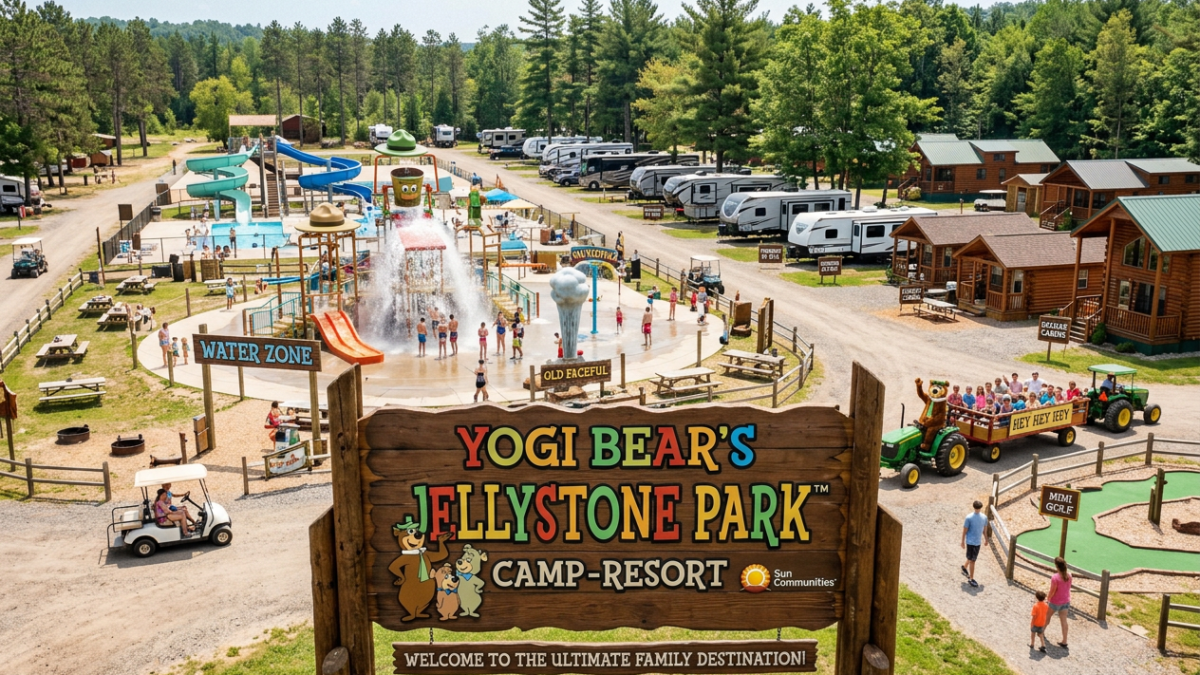

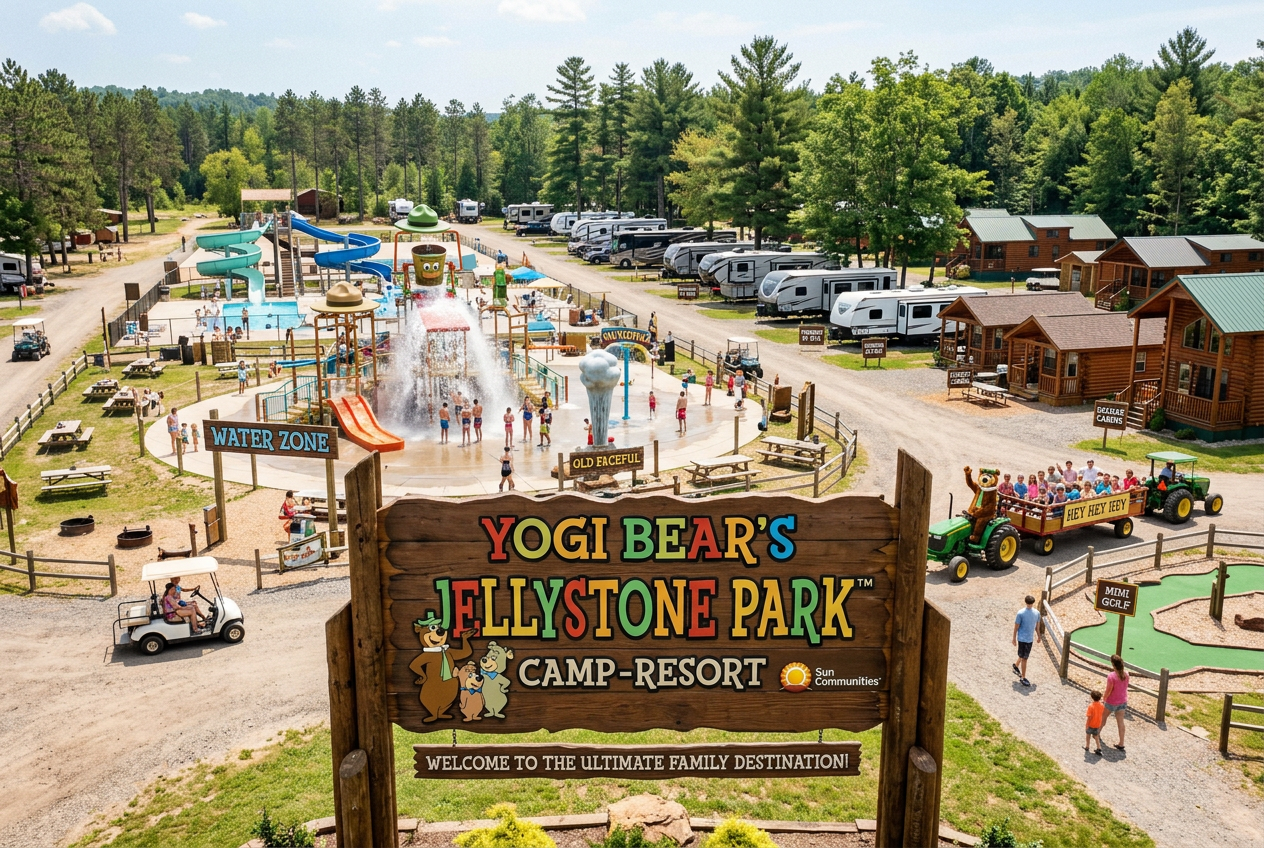
Jellystone camping resorts (often called Yogi Bear’s Jellystone Park Camp-Resorts) are built for families who want the outdoors, but also want a lot to do without leaving the campground. Think “camping + resort amenities” in one place.
If you’re considering your first stay, this guide covers what Jellystone parks are like, how to choose the right location, what it costs, what to pack, and how to plan a trip that feels fun instead of chaotic.
One important note: Jellystone Park locations are franchised. That means the vibe is similar, but the exact amenities and rules can vary by park and season. Your best trip happens when you choose the location that matches your group, then plan around what that specific park offers.
What is a Jellystone camping resort?
A Jellystone camping resort is a campground designed like a family vacation destination. You can stay in an RV, a tent site, a cabin, or a rental unit, and you’ll usually find a structured activity calendar, kid-friendly attractions, and strong “on-site fun” energy.
Some people use Jellystone as a base for nearby attractions. Others treat the campground itself as the main event.
If your ideal trip includes pool time, crafts, games, themed weekends, and easy food options, Jellystone is often a good match.
If your ideal trip is quiet hiking and early nights, Jellystone can still work, but you’ll want to be picky about the location, the site area, and the dates.
What makes Jellystone different from a typical campground?
Traditional campgrounds usually give you a site and a setting. You create your own plan.
Jellystone camping resorts tend to provide the plan for you. The big differences are usually these.
Built-in entertainment
Many parks run daily schedules with activities like crafts, contests, scavenger hunts, movie nights, wagon rides, and group games. You don’t have to invent things to do every hour.
More “resort” amenities
Instead of just a playground and a bathhouse, you often see bigger amenity lists, including water features, mini golf, jumping pillows, arcades, and snack spots.
More ways to stay
Jellystone is friendly to mixed groups because you can often book a cabin for one family and an RV site for another, then hang out together at the same campground.
A higher-energy atmosphere (at peak times)
On summer weekends, holiday weeks, and big themed events, the park can feel busy and loud in the best way for families. If you want calm, book midweek or shoulder season and choose a quieter loop.
Where you’ll find Jellystone camping resorts
Jellystone Park locations are spread across many regions in the U.S. and Canada. Some are near major tourist areas. Others are more “weekend getaway” parks for locals.
For planning, treat Jellystone like a category, not a single resort. The location you pick matters a lot.
When you’re comparing parks, focus on:
- Water features (pools, splash areas, slides, lakes)
- Lodging options (cabins, RV, glamping, tent)
- Activity calendar (daily schedule vs limited programming)
- Site layout (how close sites are to the busiest attractions)
- Rules that affect your trip (pets, quiet hours, golf carts, visitors)
Ways to stay at a Jellystone camping resort
One of the biggest reasons people choose Jellystone is flexibility. You can camp your way.
RV sites
Most Jellystone parks offer a mix of RV sites, commonly including:
- Full hook-ups (water, electric, sewer)
- Pull-through sites (helpful for large rigs)
- Back-in sites (often a bit quieter)
- Premium sites with patios or upgraded outdoor setups (varies by park)
Before you book, check site length, amp service (30/50), and whether your rig fits comfortably with slide-outs.
If you’re arriving late, confirm the check-in process and after-hours rules.
Tent sites
Tent camping can be a great fit, especially for families who want the full “camp” feel without giving up the resort activities.
To make tenting more comfortable:
- Choose a site with shade if possible
- Bring a canopy if your site is open
- Pack extra lighting (headlamps and lanterns help)
- Plan for noise on peak weekends (especially near attractions)
If quiet matters, ask the park which loops are typically calmer.
Cabins and cottages
Cabins are often the easiest path to a “no-stress” first trip. You still get the campground experience, but you don’t have to set up a tent or pack every piece of gear.
Cabins vary widely, but common features may include:
- Beds and indoor seating
- Heating/AC (confirm this, especially in shoulder season)
- Private bathrooms in many cabin tiers
- Kitchenette or basic kitchen tools in some rentals
Always check what’s included: linens, towels, cookware, grills, and fire rings can differ by cabin type and park.
Glamping and unique rentals
Some Jellystone parks offer options like yurts, safari tents, park models, or themed rentals. These can be perfect if you want the fun of camping with fewer logistics.
Glamping is also great for:
- First-time campers
- Multi-family trips where one group prefers comfort
- Shoulder-season stays when nights get cool
Again, read the fine details on what’s included so you don’t overpack or arrive missing basics.
Amenities you’ll often find on-site
Amenities vary, but Jellystone parks tend to be heavy on family-friendly features.
Water fun
Many locations focus on water attractions. Depending on the park, that might include:
- Pools (sometimes multiple)
- Splash pads and spray grounds
- Water slides
- “Water playground” style zones for younger kids
What to check before you book:
- Are water features included with your stay, or is there a separate pass?
- What are the hours and seasonal dates?
- Are there height rules for slides?
- Are life jackets allowed or required for certain zones?
If your trip is mainly about water time, choose a park that has enough water capacity for busy days.
Play and activity areas
Common on-land features include:
- Playgrounds
- Jumping pillows or inflatable play areas
- Mini golf
- Sports courts (basketball, volleyball, gaga ball)
- Arcades or game rooms (more common at larger parks)
If your kids love constant motion, look for multiple activity zones so they can rotate without getting bored.
Convenience features
These can make or break comfort:
- Camp store and basic groceries
- Ice, firewood rules, and propane availability
- Laundry facilities
- Bathhouses and showers (for tenters and some RVers)
- Wi-Fi availability (quality varies widely)
If you plan to work remotely or stream entertainment, don’t assume Wi-Fi will be strong everywhere. Ask the park directly.
Activities and themed weekends
Jellystone is known for schedules, events, and themed weekends. This is where the brand’s “vacation resort” feel shows up most clearly.
Daily activities
Many parks post daily schedules with options like:
- Crafts and kids’ workshops
- Group games and contests
- Wagon rides
- Outdoor movies
- Dance parties or foam parties
- Character appearances (varies)
If you’re traveling with kids, this is a major advantage. You can follow the schedule and let the day plan itself.
Themed weekends and seasonal events
Some parks run themed weekends such as:
- Halloween-style weekends in the fall
- Christmas in July
- Birthday celebrations and special character events
- End-of-summer and holiday themes
The key planning tradeoff:
- Themed weekends are fun, but they are often busier and book up faster.
- Non-themed weekends can feel calmer and sometimes cheaper.
If your family loves costumes, decorating, and big energy, choose a theme weekend.
If your family gets overwhelmed by crowds, go midweek or shoulder season.
Day passes and visiting without staying overnight
Some parks offer day passes on select dates, letting you use certain amenities without booking a campsite or cabin.
Day access is useful if:
- You’re staying nearby and want a “pool day”
- You’re meeting friends who are camping on-site
- You want to preview the park before booking a longer stay
Policies are location-specific, and availability can be limited. Always confirm what the day pass includes.
How much does a Jellystone camping resort trip cost?
Costs vary by location, season, and lodging type. Instead of chasing one average price, it’s more helpful to understand what drives the total.
What raises the price
- Peak summer dates and holiday weeks
- Friday and Saturday nights
- Premium RV sites and larger cabins
- Popular themed weekends
- Extra add-ons (rentals, paid activities, specialty experiences)
What lowers the price
- Midweek stays
- Shoulder season (late spring and early fall)
- Tent sites vs cabins
- Booking early (better selection, sometimes better pricing)
- Smaller cabins or simpler rentals
A simple way to estimate your budget
Think in three layers:
- Lodging (site or cabin)
- Food (cook at site vs eat out vs snack bar mix)
- Extras (activities, rentals, souvenirs)
If you want a “low-surprise” trip, decide ahead of time what extras you’re willing to pay for, and treat everything else as optional.
How to choose the right Jellystone location
Choosing the right park is the biggest decision you’ll make. A great location can make an average weekend feel like a full vacation.
Start with your trip goal
Pick one main goal:
- Water park focus
- Nature focus (lake, river, trails nearby)
- Tourist hub (near big attractions)
- Quick weekend reset (easy drive, simple schedule)
Then choose a park that specializes in your goal.
Match the park to your group
For toddlers and younger kids:
- Splash pad and shallow water areas
- Lots of daytime activities
- Multiple playgrounds
For older kids and teens:
- Bigger slides and water features
- Sports courts, jumping pillow, and late-day events
- Enough space to roam safely
For multi-family groups:
- Cabins and RV sites close enough to meet easily
- Big picnic areas and shared activity zones
- Clear visitor policies
For adults who want quieter evenings:
- Shoulder season dates
- Sites farther from the busiest areas
- Clear quiet hours and enforcement
Three things to verify before booking
- What’s included vs what costs extra
- Seasonal operating dates for key amenities
- Park rules that affect your stay (pets, golf carts, visitors, check-in/out)
Booking tips that make the trip smoother
A lot of Jellystone stress comes from small planning misses. These tips prevent most of them.
Book earlier for peak dates
Summer weekends and popular themes fill quickly at many parks. Booking early improves your choices for:
- Cabin layout
- Site location
- Number of nights available
Choose your site location like you choose a hotel room
If you can view a park map, use it.
- Close to attractions = convenience, more noise
- Farther out = quieter, more walking
- Near bathhouse = helpful for tenters, sometimes more foot traffic
If you’re unsure, call the park and describe what you want: “quiet,” “close to water,” “near playground,” etc.
Plan your arrival time
Arriving too late can feel rough, especially with kids.
If possible:
- Arrive with enough daylight to set up
- Do one simple activity after dinner
- Save the big attractions for the next day
A sample 2-night Jellystone itinerary
Use this as a template and swap in your park’s schedule.
Day 1: Arrival and easy fun
- Check in and set up your site or cabin
- Walk the park to learn where everything is
- Do one low-effort activity (playground, mini golf, wagon ride)
- Simple dinner at the campsite or cabin
- Evening activity (movie night, game time, campfire dessert)
Day 2: Full resort day
- Breakfast + morning craft or light activity
- Water time late morning through early afternoon
- Easy lunch (wraps, sandwiches, fruit)
- Afternoon rotation (jumping pillow, sports, character visit if scheduled)
- Dinner + one “special” treat (s’mores, ice cream, camp store snacks)
- Evening theme event or relaxed campsite games
Day 3: Slow morning and checkout
- Pack in stages (one person keeps kids occupied)
- Quick breakfast
- One final activity if time allows
- Checkout and a simple “on the way home” lunch stop
What to pack for a Jellystone camping resort
Packing right makes the resort feel easy.
Water essentials
- Two swimsuits per person (dry rotation helps)
- Water shoes
- Quick-dry towels
- Sunscreen and lip balm
- Goggles for kids (optional, often useful)
Camp comfort essentials
- Bug spray and itch relief
- Headlamps or lanterns
- Small first-aid kit
- Refillable water bottles
- Folding wagon or tote for pool gear
- Extra trash bags (always handy)
Clothes that match the vibe
- Light layers
- One warm hoodie or jacket per person
- Comfortable walking shoes
- “Messy” outfit for crafts and outdoor games
- Rain jacket (even in summer)
Food basics that keep life simple
Even if you plan to buy snacks on-site, having a basic plan helps.
Easy staples:
- Breakfast: eggs, oatmeal, yogurt, fruit, bagels
- Lunch: wraps, sandwiches, veggie tray, chips
- Dinner: tacos, burgers, pasta, grilled skewers, chili
- Snacks: granola bars, popcorn, fruit, marshmallows
If you’re in a cabin, check what kitchen gear is included before you bring duplicates.
Rain plan: how to still have a good trip
Bad weather doesn’t have to ruin a Jellystone weekend, but you need a plan.
If it rains:
- Use indoor or covered activities (if your park has them)
- Bring card games and simple board games
- Pack a canopy for RV/tent sites
- Keep one set of dry clothes per person reserved
- Plan a “movie night” fallback in the cabin/RV
If your park has an arcade or indoor space, it can become the “save” for a rainy afternoon. If not, a canopy plus games can still work.
Resort etiquette that keeps everyone happy
Jellystone parks are social places. A little etiquette goes a long way.
- Respect quiet hours (especially after busy event nights)
- Keep bikes and scooters under control in crowded areas
- Watch kids near roads and parking zones
- Clean up after pets and follow leash rules
- Keep your campsite tidy and food secured
If you’re using a golf cart (where allowed), drive slowly and assume kids can dart out unexpectedly.
Is a Jellystone camping resort worth it?
It depends on what you want.
Jellystone is often worth it if:
- You want a “vacation feel” without planning every activity
- Your kids love pools, games, and group events
- You like having amenities on-site
- Your group has mixed camping preferences (cabin + RV + tent)
Jellystone may not be your best fit if:
- You want quiet, remote camping
- You dislike structured activities and crowds
- You’re looking for the lowest-cost campground option
A useful compromise is booking shoulder season or midweek. You often get the same amenities with less crowd pressure.
Jellystone camping resort FAQ
Do you have to camp, or can you stay in a cabin?
Many parks offer cabins and rentals. You can get the campground vibe without tent camping.
Are activities included?
Many activities are included, but some parks may offer optional add-ons or rentals that cost extra. Check your park’s list so you can plan your spending.
Are pets allowed?
Policies vary by location and lodging type. Some cabins are pet-friendly, others are not. Confirm before you book.
What’s the best age for Jellystone?
Many families find it especially strong for kids because of the activities and water features. The best age depends on the specific park’s amenities and schedule.
Can adults enjoy it too?
Yes. Adults often enjoy it most when they plan around comfort: a good site, a calm schedule, and time for the pool, campfires, and easy meals.
The bottom line
A Jellystone camping resort is designed for families who want outdoor time plus built-in fun. You get choices (RV, tent, cabin), plenty of on-site attractions, and an activity calendar that can carry the whole trip.
To get the best experience, pick the location that matches your group, choose dates that fit your crowd tolerance, and pack like you’re going to a pool plus a campground.
Amenities and schedules can vary by park and season, so it’s smart to check the official Camp Jellystone site and your specific park’s info page before you finalize your plan.
