
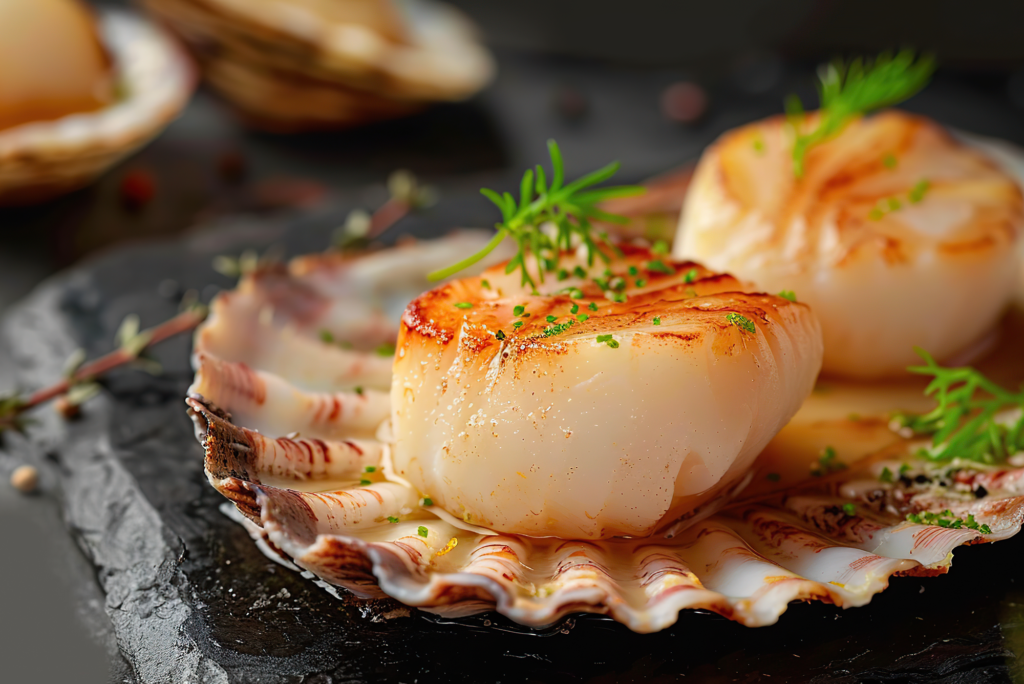
Scallops are one of the fastest “restaurant-quality” proteins you can make at home. When they’re cooked right, they’re sweet, tender, and buttery, with a deep golden crust. When they’re cooked wrong, they turn rubbery in a hurry.
This guide walks you through choosing the right scallops, prepping them correctly, and cooking them with confidence—whether you’re pan-searing, baking, broiling, grilling, or using frozen scallops.
Scallops 101: What You’re Buying
There are two main types you’ll see at most stores:
Sea scallops
These are the larger ones most people pan-sear. They’re usually sold by “count per pound” (like U-10, 10/20, 20/30). Lower numbers mean bigger scallops.
Bay scallops
These are smaller and cook very quickly. They’re better for pastas, chowders, and quick sautés rather than thick searing.
Dry vs. Wet Scallops (This Matters a Lot)
If you want that golden crust, you want dry scallops.
Dry scallops
These are untreated. They sear better, taste sweeter, and release less water in the pan.
Wet scallops
These are treated with a solution (often phosphates) to help them retain moisture. They tend to weep liquid, steam in the pan, and brown poorly.
Shopping tip: If the label says “dry,” “chemical-free,” or “no added preservatives,” you’re usually in good shape. If you see scallops sitting in a milky liquid, that’s often a sign they’re wet-packed.
What Scallops Should Smell and Look Like
Fresh scallops should smell like the ocean—clean and slightly briny—not fishy.
Look for:
- Firm, slightly translucent flesh (fresh)
- A uniform off-white or pale beige color
- Minimal liquid in the package
Avoid:
- Strong fish odor
- Slimy texture
- Excess liquid or scallops that look “soaked”
Tools That Make Scallops Easier
You don’t need fancy gear, but these help a lot:
- A heavy skillet (cast iron or stainless steel)
- Paper towels (for drying)
- Tongs or a thin spatula
- Optional: instant-read thermometer
- Optional: wire rack (for drying in the fridge)
The Biggest Secret to Great Scallops: Dry Them Thoroughly
Browning happens when moisture is low and heat is high.
The fast method (best for weeknights)
- Lay scallops on a plate lined with paper towels.
- Pat the tops dry.
- Flip and pat the other side.
- Let them sit 5–10 minutes at room temp, then pat again.
The “best crust” method (if you have time)
- Place scallops on a wire rack over a sheet pan.
- Refrigerate uncovered for 30 minutes to 2 hours.
- Pat lightly right before cooking.
This air-drying step helps the surface get tacky, which leads to better caramelization.
Food Safety Basics for Scallops
Handle scallops like other seafood: keep them cold, don’t leave them out too long, and cook until they’re opaque and firm. Many food-safety references list 145°F (63°C) as a safe cooking temperature for seafood, and note that scallops should turn milky white/opaque and firm when done.
The Classic Method: Perfect Pan-Seared Scallops
If you learn one scallop method, make it this one.
Ingredients (serves 2)
- 10–12 large sea scallops
- Salt and pepper
- 1–2 tbsp high-heat oil (avocado, grapeseed, canola)
- 1–2 tbsp butter (optional but recommended)
- 1 garlic clove, smashed (optional)
- Lemon wedges (optional)
Step-by-step pan-searing
- Remove the side muscle (if present).
Some scallops have a small, tough “tab” on the side. Peel it off and discard. - Dry thoroughly.
Pat dry aggressively with paper towels. - Season right before cooking.
Salt draws moisture, so season just before they hit the pan. - Heat the pan until it’s properly hot.
Put your skillet over medium-high to high heat for 2–3 minutes. Add oil. It should shimmer. - Place scallops in the pan with space between them.
Don’t crowd the pan. If needed, cook in batches. - Don’t move them.
Sear for about 1½ to 2½ minutes on the first side for large scallops. You’re looking for a deep golden crust. - Flip once.
Sear the second side for 1 to 2 minutes. The center should still be tender. - Optional finish with butter.
Lower heat slightly, add butter (and garlic if using), and spoon the butter over the scallops for 15–30 seconds. - Serve immediately.
Scallops cool fast and can overcook if left in a hot pan.
How to Tell When Scallops Are Done (Without Guessing)
Scallops go from perfect to rubbery quickly. Aim for:
- Opaque edges with a slightly translucent center (especially for big sea scallops)
- Firm but springy when pressed gently
- A clean, sweet smell (not “fishy”)
Visual cues
- Raw scallops look glossy and translucent.
- Cooked scallops turn milky white and matte.
Timing guidelines
- Large sea scallops: 3–5 minutes total (depending on size and pan heat)
- Medium scallops: 2–4 minutes total
- Bay scallops: 1–2 minutes total (they’re easy to overcook)
Thermometer option
If you use a thermometer, check the thickest scallop in the center. Pull them slightly early because carryover heat continues cooking.
Common Mistakes That Ruin Scallops (And How to Fix Them)
Mistake 1: The pan isn’t hot enough
If the oil isn’t shimmering, scallops release liquid and steam.
Fix: Preheat longer, and don’t add scallops until the pan is truly hot.
Mistake 2: Wet scallops (or not drying enough)
Moisture prevents browning.
Fix: Pat dry twice. Refrigerate uncovered if you can.
Mistake 3: Crowding the pan
Too many scallops drop the pan temperature and trap steam.
Fix: Cook in batches. Give each scallop space.
Mistake 4: Flipping too early
If they stick, they’re not ready.
Fix: Wait 15–30 more seconds. A good crust releases naturally.
Mistake 5: Overcooking
Scallops turn chewy when cooked too long.
Fix: Shorten the second-side cook. Serve immediately.
How to Cook Frozen Scallops (So They Don’t Turn Watery)
Frozen scallops can be excellent, but thawing and drying are everything.
The best thaw method
- Place scallops in the fridge overnight in a bowl.
- Drain any liquid.
- Pat very dry before cooking.
The faster thaw method
- Seal scallops in a zip-top bag.
- Submerge in cold water for 20–30 minutes.
- Drain and pat very dry.
Avoid thawing in warm water. It can affect texture and encourages uneven thawing.
After thawing, treat them like fresh scallops—dry, hot pan, quick cook.
Baked Scallops (Easy and Hands-Off)
Baking is great when you want scallops with a topping or sauce.
Simple baked scallops (breadcrumbs + butter)
- Preheat oven to 425°F (220°C)
- Place scallops in a lightly oiled baking dish
- Top with:
- 2–3 tbsp melted butter
- ¼ cup breadcrumbs (panko works well)
- Lemon zest, salt, pepper
- Optional: parmesan, parsley
Bake 8–12 minutes depending on size, until opaque and tender. Broil 30–60 seconds at the end for extra color.
Broiled Scallops (Fast With Great Browning)
Broiling gives you high heat from above, similar to restaurant salamanders.
How to broil scallops
- Heat broiler on high.
- Pat scallops dry and place on a foil-lined tray.
- Brush lightly with oil or melted butter.
- Broil 4–7 minutes, depending on size, watching closely.
Broilers vary a lot. The key is to pull them the moment they turn opaque and firm.
Grilled Scallops (Better Than You Think)
Scallops grill beautifully, especially large sea scallops.
Best practices for grilling
- Use large scallops (small ones are tricky)
- Pat very dry
- Lightly oil the scallops (not just the grill)
- Use skewers if you want easier flipping
Grill timing
- High heat
- 1½ to 2½ minutes per side
- Look for grill marks and an opaque edge
If your scallops are smaller, a grill basket can help.
Air Fryer Scallops (Quick, But Use the Right Approach)
Air fryers cook fast, but scallops can dry out if you push them too long.
Air fryer method (best for breaded or buttered scallops)
- Preheat air fryer to 400°F (205°C)
- Lightly oil scallops or use a thin butter coating
- Cook 5–8 minutes depending on size, flipping halfway
If you want a true crust like pan-seared scallops, the skillet is still the best tool.
Flavor Pairings That Make Scallops Taste “Restaurant-Level”
Scallops are mild and slightly sweet, so they shine with bright, clean flavors.
Classic flavor combos
- Lemon + butter + herbs
- Garlic + parsley
- White wine + shallots
- Capers + browned butter
- Citrus + chili (orange, lime, yuzu, or grapefruit)
Great spice and seasoning ideas
- Smoked paprika + lemon
- Cajun seasoning (lightly—don’t overpower)
- Old Bay-style blends
- Black pepper + a pinch of cayenne
5 Simple Sauces for Scallops
Each of these can be made while your scallops rest for a minute on the plate.
Brown butter lemon sauce
- Melt butter until it turns golden and nutty
- Add lemon juice, pinch of salt
- Spoon over scallops
Garlic herb butter
- Melt butter with minced garlic
- Add parsley or chives
- Finish with lemon zest
White wine pan sauce
- After searing scallops, remove them
- Add shallots, then a splash of white wine
- Reduce briefly, swirl in butter
Quick chili-lime sauce
- Mix lime juice, a little honey, chili flakes, and olive oil
- Spoon lightly over scallops
Creamy Dijon sauce (fast)
- Warm a spoon of Dijon with a splash of cream
- Add black pepper and lemon
Keep sauces simple. The scallops should still be the star.
Best Sides for Scallops
Scallops work with both light and hearty sides.
Light sides
- Arugula salad with lemon vinaigrette
- Roasted asparagus
- Sautéed spinach
- Cucumber and dill salad
Comfort sides
- Risotto (especially lemon or mushroom)
- Creamy polenta
- Mashed potatoes
- Buttered pasta with herbs
“Dinner party” sides
- Cauliflower purée
- Roasted fennel
- Parmesan roasted potatoes
- Charred broccolini
Simple Scallop Recipes You Can Rotate All Year
Pan-seared scallops with lemon garlic butter
Make the classic sear, then finish with butter, garlic, lemon, and parsley. Serve with a green veg and a simple carb.
Scallops over creamy polenta
Sear scallops, spoon over polenta, and add a quick pan sauce with wine and butter.
Scallop pasta (fast and light)
Cook pasta. Sear scallops. Toss pasta with olive oil, garlic, lemon zest, and a splash of pasta water. Add scallops at the end.
Baked scallops with crispy topping
Bake with buttered breadcrumbs and herbs. Serve with salad and roasted vegetables.
Spicy citrus scallops
Sear scallops, finish with lime juice and chili flakes, and serve with rice and a crunchy slaw.
How to Cook Bay Scallops Without Overcooking Them
Bay scallops don’t need a long sear. They’re better cooked quickly in a sauce or sauté.
Quick sauté method
- Pat dry
- Heat a skillet with oil or butter over medium-high
- Cook 30–60 seconds per side, just until opaque
Bay scallops are ideal for:
- Chowders
- Pasta sauces
- Stir-fries
- Scallop “scampi” style dishes
Make-Ahead Tips (So You’re Not Rushing)
Scallops are best cooked right before serving, but you can prep ahead.
What you can do early
- Remove side muscles
- Dry scallops and refrigerate uncovered (great for crust)
- Mix sauces and prep sides
What not to do early
- Don’t sear scallops ahead and reheat if you can avoid it
Reheating often pushes them into rubbery territory.
If you must reheat, do it gently in a low pan with a little butter, just until warm.
Frequently Asked Questions About Cooking Scallops
Why are my scallops not browning?
Most often: they’re too wet, the pan isn’t hot enough, or the pan is overcrowded. Dry them more, preheat longer, and sear in batches.
Can I cook scallops in olive oil?
Yes, but use a high-heat olive oil or mix olive oil with a neutral oil. Extra-virgin olive oil can smoke at high searing temps.
Do I need to rinse scallops?
Usually no. Rinsing adds water and makes browning harder. If they have grit, a quick rinse is okay, but dry them extremely well afterward.
What’s the white “liquid” that sometimes comes out?
That’s usually moisture and proteins releasing during cooking. It’s more common with wet scallops and with lower heat.
How long do scallops last in the fridge?
If you buy them fresh, it’s best to cook them the same day. If you must store them briefly, keep them very cold and use them as soon as possible.
A Reliable “No-Stress” Scallop Timeline
If you want a clean process that works every time:
- Dry scallops (5–10 minutes)
- Prep sides and sauce (10–20 minutes)
- Heat pan (2–3 minutes)
- Sear scallops (3–5 minutes total)
- Sauce and serve (1–2 minutes)
That’s it. Most of the work is in drying and heat control.
Final Tips for Restaurant-Quality Scallops at Home
- Buy the best scallops you can: dry-packed if possible.
- Dry them more than you think you need to.
- Use a hot pan and don’t crowd it.
- Flip once, and don’t overcook the second side.
- Keep the flavors simple: butter, lemon, herbs, and a little salt go a long way.
Once you nail the basic pan sear, scallops become one of the quickest impressive dinners you can make—weeknight easy, special-occasion worthy.